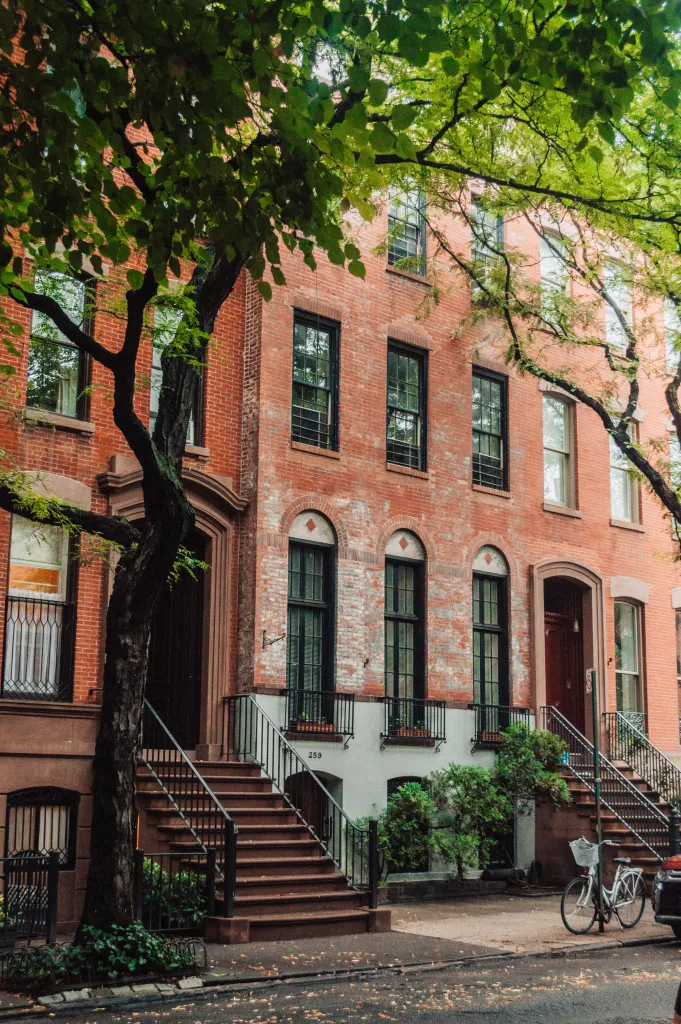
Ask ten Manhattan buyers to name the neighborhood they daydream about, and a striking number will say the West Village. Its low-rise streets, tree canopies, and hidden mews feel like a different city than the grid just a few blocks east. But the charm that draws people in also makes West Village real estate one of the most competitive and misunderstood markets in Manhattan. The inventory is small, the building types are unusually varied, and pricing rewards buyers who understand the block-by-block differences. Here is how I help my clients approach it with clarity.
Why the West Village Stands Apart
Most of Manhattan is built on a rigid grid. The West Village is not. Its streets bend, cross at odd angles, and carry names instead of numbers, a legacy of the neighborhood's early development that predates the 1811 street plan. That irregular layout, protected as part of the Greenwich Village Historic District, is why so many blocks feel intimate and low to the sky. Supply is effectively fixed: landmark rules limit what can be torn down or built up, so the stock of Federal-era townhouses, converted warehouses, and prewar co-ops cannot simply be replicated. When demand rises, and in the West Village it usually does, it pushes against a supply that barely moves. That dynamic is the single most important thing to understand about West Village real estate before you start touring.

The West Village's Distinct Pockets
One of the most common mistakes I see is treating the West Village as a single market. In practice it is a set of small, distinct pockets, each with its own building stock, pricing, and rhythm. Knowing which one fits your life is half the battle.
The Far West and the Waterfront
West of Hudson Street, toward the river and Hudson River Park, the neighborhood opens up. This is where you find a cluster of newer and converted full-service condos, including trophy waterfront buildings on and around West Street and Perry Street. Buyers who want doormen, elevators, garages, and river light gravitate here. It is also where the most headline-grabbing sales in the neighborhood tend to happen, since these buildings offer the amenities and floor plates that global buyers expect.
The Historic Core
The heart of the neighborhood, roughly between Seventh Avenue and Hudson Street around Bleecker, Perry, Charles, and West 10th, is townhouse country. Here you find Federal and Greek Revival row houses, brownstones, and small prewar co-ops carved out of former single-family homes. This is the picture-postcard West Village, and it trades at a premium precisely because the streetscape is irreplaceable. Inventory turns over slowly, so patience and readiness matter more than in almost any other part of Manhattan.
The Eastern Edge Near Sixth Avenue
Closer to Sixth Avenue and the border with Greenwich Village proper, the buildings get a little taller and the mix shifts toward postwar co-ops and midsize prewar buildings. This edge often offers the most attainable entry point into West Village real estate, with more one and two-bedroom inventory and slightly gentler pricing than the historic core, while keeping you inside the neighborhood you came for.
Townhouses, Co-ops, and Condos in the West Village
The West Village offers an unusually wide range of ownership types in a small footprint, and each comes with tradeoffs. Townhouses give you the whole building and the land beneath it, along with the freedom to renovate, but they carry the full weight of maintenance, systems, and carrying costs; I walk buyers through that process in detail in my guide to buying a Manhattan townhouse. Co-ops, often housed in converted row houses or small prewar buildings, tend to be the most attainable way in, but they come with board approval and financial scrutiny. Condos, concentrated in the far west and newer conversions, offer the most flexibility for financing and resale at the highest price per square foot. Deciding which structure fits your goals is essential, and I break down that tradeoff in my overview of the co-op versus condo decision in Manhattan.
What West Village Real Estate Costs in 2026
Pricing spans an unusually wide band because the building types are so varied. As a general guide heading into 2026, condos and well-renovated co-ops in the neighborhood often trade from roughly $2,000 to $3,500 per square foot, with premier waterfront and new-construction units commanding well above that. Townhouses are their own market entirely, frequently ranging from the mid single-digit millions for a project property to well into the tens of millions for a restored, move-in-ready home on a prime block. Because so much of the co-op inventory sits in small converted buildings, monthly carrying costs vary widely, and two similarly priced apartments can operate very differently. I always model the all-in monthly number with clients before anyone falls for a listing.
How to Approach a West Village Search
- Get financing and financials ready first. Small co-op buildings can have particular lending rules and board standards, and the best listings move quickly. Knowing your numbers before you tour lets you act with confidence.
- Study the block, not just the apartment. In a neighborhood this granular, the difference between two streets a few hundred feet apart can be significant in light, noise, and value. Visit at different times of day.
- Read the building's health. Reserve funds, recent assessments, and board minutes reveal whether a small building is well run. In converted townhouses, aging systems and shared responsibilities deserve close attention.
- Be ready to move. Well-priced homes on desirable West Village blocks still draw competition. Preparation is what lets you act decisively when the right one appears.
The Bottom Line
The West Village rewards buyers who understand its pockets, its landmark constraints, and its unusually broad mix of ownership types. It is not one market but several, and the right strategy depends on which version of the neighborhood fits your life and budget. If you are weighing it against other parts of the borough, my overview of the best neighborhoods to buy in Manhattan in 2026 puts the West Village in context alongside the rest of the market.
With more than 26 years of experience and $1.7 billion in career sales across Manhattan, including landmark West Village residences, I help sellers capitalize on their neighborhood's draw, and I help buyers approach The Village with a focused, honest plan. If you own in the West Village, or are considering a move to the West Village, I welcome the chance to share my perspective on how my experience and expertise can best benefit your goals.
Frequently Asked Questions
- Is the West Village mostly co-ops, condos, or townhouses?
- It is one of the most mixed neighborhoods in Manhattan. The historic core is dominated by townhouses and small co-ops converted from row houses, while the far west near the river holds most of the full-service condos. The eastern edge near Sixth Avenue leans toward postwar and prewar co-ops.
- How much does West Village real estate cost in 2026?
- Pricing varies widely by building type. As a general guide, condos and renovated co-ops often trade from about $2,000 to $3,500 per square foot, with premier waterfront units higher. Townhouses range from the mid single-digit millions for project properties to well into the tens of millions for restored homes on prime blocks.
- Which part of the West Village offers the best value?
- The eastern edge closer to Sixth Avenue generally offers the most attainable entry point, with more one and two-bedroom co-op inventory and slightly gentler pricing than the landmark historic core, while still keeping you inside the neighborhood.
- Why is inventory so limited in the West Village?
- Most of the neighborhood sits within the Greenwich Village Historic District, so landmark rules sharply limit demolition and new construction. That fixed supply, combined with steady demand, is why well-located listings move quickly and hold value.
- Is buying in the West Village a good long-term investment?
- The West Village has historically been one of Manhattan's most resilient markets thanks to protected low-rise streets, limited supply, and durable demand. Long-term performance still depends on the specific building, its condition, and how well it is maintained, but the neighborhood is known for holding value.